Eleven, by Sandra Cisneros. Material para estudiantes
Propuesta para abordar una obra literaria en el aula a partir de situaciones de lectura, oralidad, escritura y reflexión sobre el lenguaje.
Creado: 20 octubre, 2026 | Actualizado: 4 de noviembre, 2026
Autoría:
PART A: Before reading
Meet the author
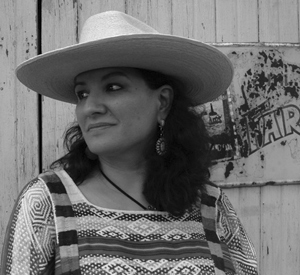
Foto de la autora. Fuente: Wikimedia Commons.
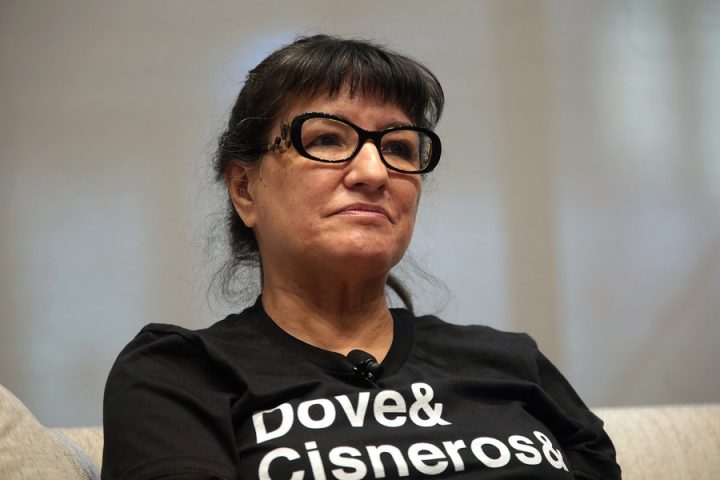
- Do you know Sandra Cisneros? Look at the photograph and guess.
- She is a writer / a teacher / an artist.
- She is from Argentina / Mexico / the United States.
- She speaks only English / only Spanish / English and Spanish.
- Sandra Cisneros tells stories about people and their experiences / animals and nature / famous historical events
- Now read the text and check your predictions. Which ones were right?
Sandra Cisneros is a Mexican-American writer. She was born in Chicago in 1954, where she grew up speaking Spanish and English. When she was at school, she sometimes had a hard time and felt out of place.
Sandra later became a teacher and a famous writer. In many of her stories, she writes about growing up, family, and the experiences of young Latina girls, especially those who feel misunderstood. She also loves to paint!
Think ahead
- Read the following questions and think about your answers. Take down some notes.
When we grow up, we gradually become adults. What does "growing up" mean to you?
What changes as we grow up?
Is growing up easy or challenging? Why?
What can be difficult about growing up?
On our birthday, we become one year older, but …do we feel older?
Do you always feel your age?
How old are you? How old do you feel?
Can you feel younger or older sometimes? When?
Birthdays can be special days. What do you usually expect on your birthday?
Do you celebrate your birthday? How?
Have you ever had an unexpected experience on your birthday? How did you feel?
Think-Pair-Share
- Discuss the questions above in pairs or groups of three. Here are some useful words and phrases:
| Word bank fun - chores - responsibilities - work - play - help - learn - know - celebrate - party - have fun - blow candles - presents |
"For me, growing up means...",
"I don't always feel my age because...",
"A moment that was hard for me was when...",
“I remember a birthday when ..."
"I felt really sad / angry / upset because..."
“I agree with you because..."
"I see what you mean, but I think...”
PART B: While reading
Guided reading aloud
- Listen to your teacher read the first part of the story. Follow the text and think about Rachel’s ideas and feelings.
Eleven
What they don't understand about birthdays and what they never tell you is that when you're eleven, you're also ten, and nine, and eight, and seven, and six, and five, and four, and three, and two, and one. And when you wake up on your eleventh birthday you expect to feel eleven, but you don't. You open your eyes and everything's just like yesterday, only it's today. And you don't feel eleven at all. You feel like you're still ten. And you are—underneath the year that makes you eleven.
Like some days you might say something stupid, and that's the part of you that's still ten. Or maybe some days you might need to sit on your mama's lap because you're scared, and that's the part of you that's five. And maybe one day when you're all grown up maybe you will need to cry like if you're three, and that's okay. That's what I tell Mama when she's sad and needs to cry. Maybe she's feeling three.
Because the way you grow old is kind of like an onion or like the rings inside a tree trunk or like my little wooden dolls that fit one inside the other, each year inside the next one. That's how being eleven years old is.
You don't feel eleven. Not right away. It takes a few days, weeks even, sometimes even months before you say Eleven when they ask you. And you don't feel smart eleven, not until you're almost twelve. That's the way it is.
This story is included in the collection Woman Hollering Creek and Other Stories (1991) by Sandra Cisneros.
1. Answer the questions. Go back to the text to find the information that you need.
How does Rachel feel about turning eleven? Why?
According to Rachel, can you feel younger than your actual age? What examples does she give?
What three things does Rachel compare growing older to?
How long does Rachel say it can take to feel your age?
2. Share your ideas
Do you agree with Rachel?
Do you ever feel younger or older than your age? When?
Do you think we always behave our age? Why or why not?
Do you think adults sometimes feel like children? When?
I agree with Rachel because...
I don't agree because...
I sometimes feel younger when...
I think adults can feel like children when...
3. Predict and read
Today is Rachel’s birthday, and she is going to school. How do you think she will feel? Why?
Read the next part of the story up to “…only Mrs. Price pretends like everything's okay”. Check your prediction. Were you right? Why or why not?
4. Order the events in the story. Which parts of the text helped you decide?
| Order | Events | Words and phrases from the text to support your answers |
| a- Rachel wishes she wasn’t eleven. | ||
| 1 | b- Mrs. Price asks whose sweater it is and holds it up. | |
| c- Rachel tries to tell Mrs. Price the sweater isn’t hers. | ||
| d- Sylvia says the sweater belongs to Rachel. | ||
| e- Phyllis Lopez says the sweater is hers. | ||
| f- Mrs. Price forces Rachel to wear the sweater. | ||
| g- Rachel cries in front of the class. |
5. Reread the description of the sweater and draw it.
6. How does Rachel feel? Find these expressions in the text and match them with their meanings.
a. sick feeling inside
b. nothing comes out of my mouth
c. I wish I was invisible
d. my body shaking
1. Rachel is so embarrassed that she prefers to be ignored.
2. She is so nervous that her body trembles.
3. She is so upset that she feels sick.
4. She is so troubled that she cannot speak.
7. Read the end of the story.
- Before reading, you predicted how Rachel would feel on her birthday. Were you right? How does she feel at the end? Choose two words and explain your choice.
happy – sad – angry – embarrassed – disappointed – lonely – furious – exhausted – respected – insulted
Rachel feels __________ and __________ because ________________________________________.
- Do you understand Rachel? What do you think she wants to do next? Write down your idea.
8. Explore the author’s language
- Look at the images. Find references to them in the story. What do they tell us about Rachel’s feelings?
- Copy the chart in your folder and complete it.
What does the image show? | What does it show about Rachel? | |
 | an onion | Rachel has different ages/feelings inside her. |
 | ||
 | ||
 | ||
 | ||
 | ||
 |
Fuente de imágenes: Wikimedia Commons.
- Many ideas are mentioned over and over again. List them and think: What ideas and feelings do they evoke?
1. You're eleven, you're also ten, and nine, and eight, and seven, and six, and five, and four, and three, and two, and one.
2. _________________________________________________________.
3. _________________________________________________________.
4._________________________________________________________.
PART C: After reading
Soundtrack of Rachel’s emotions
- Imagine a film director wants to make a film of “Eleven.” Which songs could be part of the soundtrack?
- Work in groups. Choose 3 songs that match Rachel’s emotions in the story. Be ready to explain your choices to the class.
| Song title & artist | Lines/phrases from the song | Connection with the story |
We have chosen “…” by …
This song connects to the part when…
It shows that …
We chose this song because…
* Por razones de derechos de autor, no es posible reproducir la totalidad del cuento. El texto completo pertenece a la colección Woman Hollering Creek and Other Stories, publicada en 1991, y puede consultarse en línea: “Eleven”, by Sandra Cisneros. En la web, pueden encontrarse videos de la autora leyendo el cuento: Sandra Cisneros Reads Eleven.